

Steel production does not allow room for guesswork. Equipment choices affect heat control, material integrity, energy efficiency, and how reliably a facility can meet production targets shift after shift. For operations teams and engineers, selecting the right steel processing equipment manufacturers means choosing systems that integrate seamlessly, perform consistently, and withstand real-world plant conditions.
If you’re a decision-maker evaluating engineered solutions for steel processing applications, you’ll understand how performance, documentation, and long-term reliability matter. Whether the goal is to stabilize utilities, improve process efficiency, or support future expansion, the focus remains on equipment that aligns with how steel facilities actually operate.
Equipment selection directly impacts product integrity, process repeatability, regulatory readiness, and long-term operational risk. Reliable pharmaceutical manufacturing equipment suppliers support pharmaceutical facilities with:
Steel processing depends on controlled operating conditions, clear documentation, and disciplined fabrication practices that support inspection, safety expectations, and plant standards.
When projects require specific materials, inspection steps, traceability, export documentation, or code-related compliance (where applicable), those requirements should be clearly defined during the RFQ process so the manufacturing path and documentation package align with internal quality systems and operational expectations.
Steel operations rely on equipment matched to real pressures, temperatures, loads, and production targets. Proper configuration helps maintain stable vacuum performance, controlled steam conditions, efficient recovery, and consistent process outcomes, while reducing variability and maintenance burden.
As experienced steel processing equipment manufacturers, we provide engineered selection, custom configurations, and sizing guidance for steel facilities, from targeted upgrades to plant-wide process improvements.
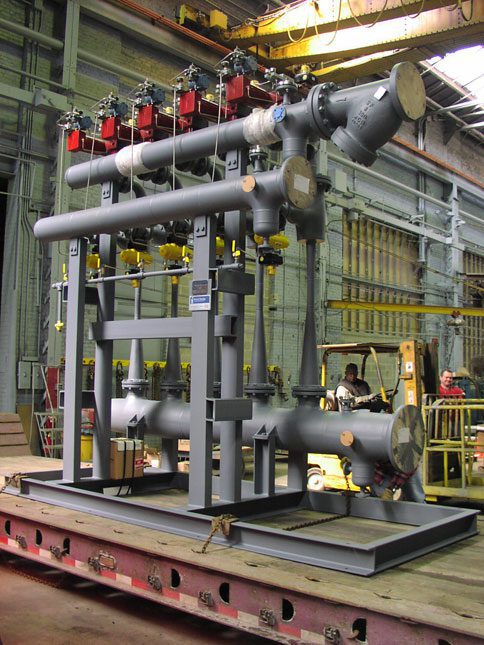
Desuperheaters and thermocompressors support controlled steam conditions where utility stability impacts process performance and equipment protection. Desuperheaters help regulate steam temperature to reduce thermal stress on downstream equipment, while thermocompressors can recover and recompress low-pressure steam or vapor to improve efficiency where the process supports it. For steel operations, well-specified steam conditioning supports repeatability and helps stabilize critical process zones.
Steam jet vacuum systems (ejectors) support vacuum generation and vapor handling in steel processing operations that require dependable performance under varying loads. Proper configuration depends on process conditions, required vacuum levels, and vapor stream composition. Suppliers who provide engineered sizing support help align ejector systems with real operating targets, avoid excess utility usage, and maintain stable operation during startup, shutdown, or load shifts.
Thermocompressors often play a valuable role where steam reuse can reduce energy loss and support more stable operating conditions. In the right application, recovering low-pressure steam and recompressing it to a usable level can help reduce utility waste and support consistent process delivery. Identifying these opportunities early during equipment selection helps steel facilities make decisions that improve lifecycle value.
Steel facilities often face space limitations, existing utility configurations, and strict uptime expectations. Even the best equipment underperforms if it is not integrated to match the layout, available services, and maintenance access. Proper planning around tie-ins, access clearances, and operating constraints helps reduce surprises during installation and supports smoother commissioning and ramp-up.
Steel processing equipment must fit within operating realities. Think utility limits, space constraints, access requirements, and the performance targets your team is accountable for.
Support for engineered steel solutions includes:
Long-term value in steel processing comes from equipment that remains serviceable, supportable, and reliable throughout its lifecycle.
Support options you can utilize include:
To streamline selection and pricing from steel processing equipment manufacturers, include:
Selecting steel processing equipment involves technical, operational, and procurement considerations. These frequently asked questions address common concerns related to sizing, integration, documentation, customization, and long-term support.
Expect engineering support that accounts for real operating conditions, robust equipment selection for industrial duty cycles, and documentation aligned with your facility’s procurement and operating expectations.
Proper sizing depends on required vacuum level, load conditions, vapor composition, and operating variability. Sharing process targets and stream conditions helps align the system to performance needs without oversizing utilities.
Desuperheaters are valuable wherever steam temperature must be controlled to protect downstream equipment, stabilize process conditions, or reduce the variability associated with superheated steam.
In the right application, thermocompressors can recover low-pressure steam and recompress it for reuse. This can reduce steam waste and improve delivery stability by enabling recovery.
Clearing process data, performance targets, available utilities, material expectations, documentation requirements, and site constraints reduces back-and-forth and improves pricing and sizing accuracy.